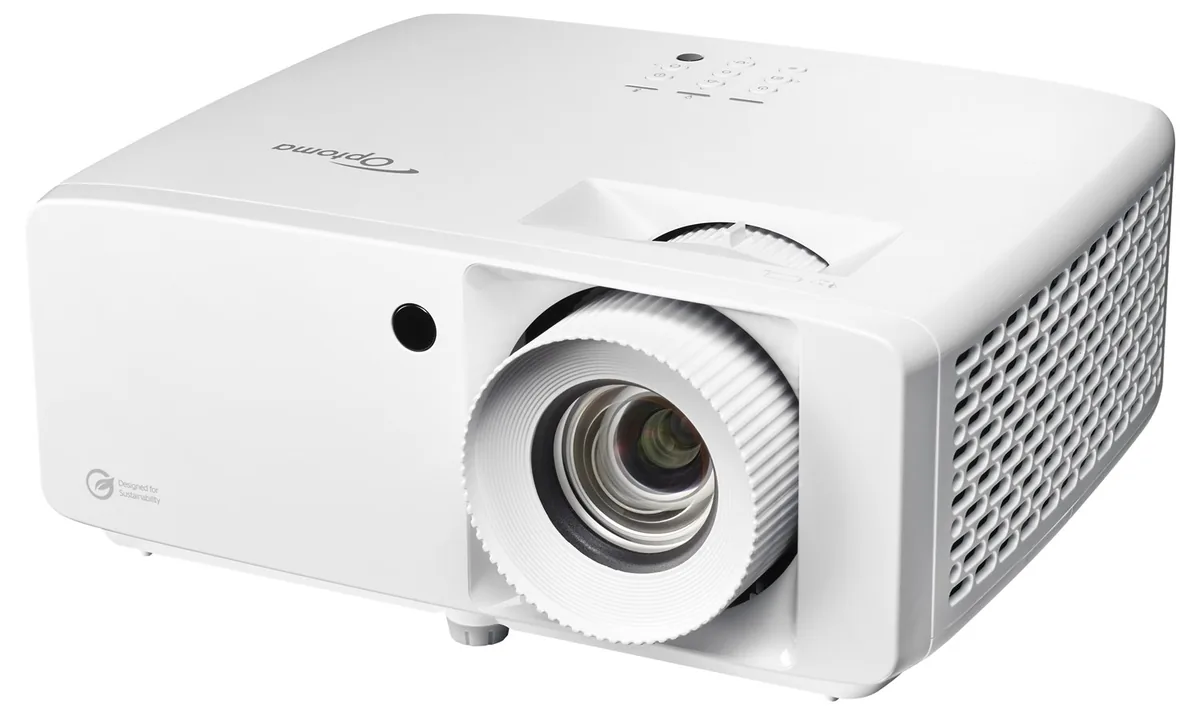
Optoma UHZ66
Home theater · DLP · 4K pixel-shift
- Brightness
- 4,000lumensANSI
- Screen at 10 ft
- 61–98 in
- Input lag
- 9 ms
- 4,000 ANSI lumens
- 30,000-hour laser
- 1.6x zoom
Best for: A bright family room where the projector has to reach from the back wall
Home theater~$1,599Optoma
Optoma's mainstream laser home-theater projector: 3,000 ANSI lumens, a 30,000-hour laser, a 1.3x zoom with a little vertical shift, and 20 W of built-in audio. It is the model most people mean when they ask for a laser projector that costs under two thousand dollars.
Approx. price
~$1,599
snapshot, not a live price
Best for: A first laser projector for a mixed-use room under $2,000
The two lists above are read off manufacturer specifications and published measurements, not from owner reports. Where owner discussion has been collected it appears separately below, so the two are never mistaken for each other.
This projector has the best-documented input-lag figures of anything in this catalog, because an owner published the measured numbers across every mode: 18 ms at 1080p/60 and 4K/60, 9 ms at 1080p/120 and 5 ms at 1080p/240 in enhanced gaming mode. The caveat that comes with them is important — those figures require game mode with no digital correction in the path, which means the projector has to be physically square to the screen.
The rainbow artifact produces the most interesting split in owner reports. One owner who sees it on many older DLP projectors says he almost has to force it on this one, crediting the higher refresh rate. Another has owned it four months, finds it hard to enjoy because of coloured flashes on end credits and bright objects in dark scenes, and is asking whether a grey screen would help. It would not: the artifact is in the light path, not the surface.
The other recurring issue is HDMI handshaking. Owners report inputs failing to synchronise often enough that it reads as a known characteristic rather than a one-off, and the brand's one-year standard warranty makes owners more nervous about that than they would otherwise be.
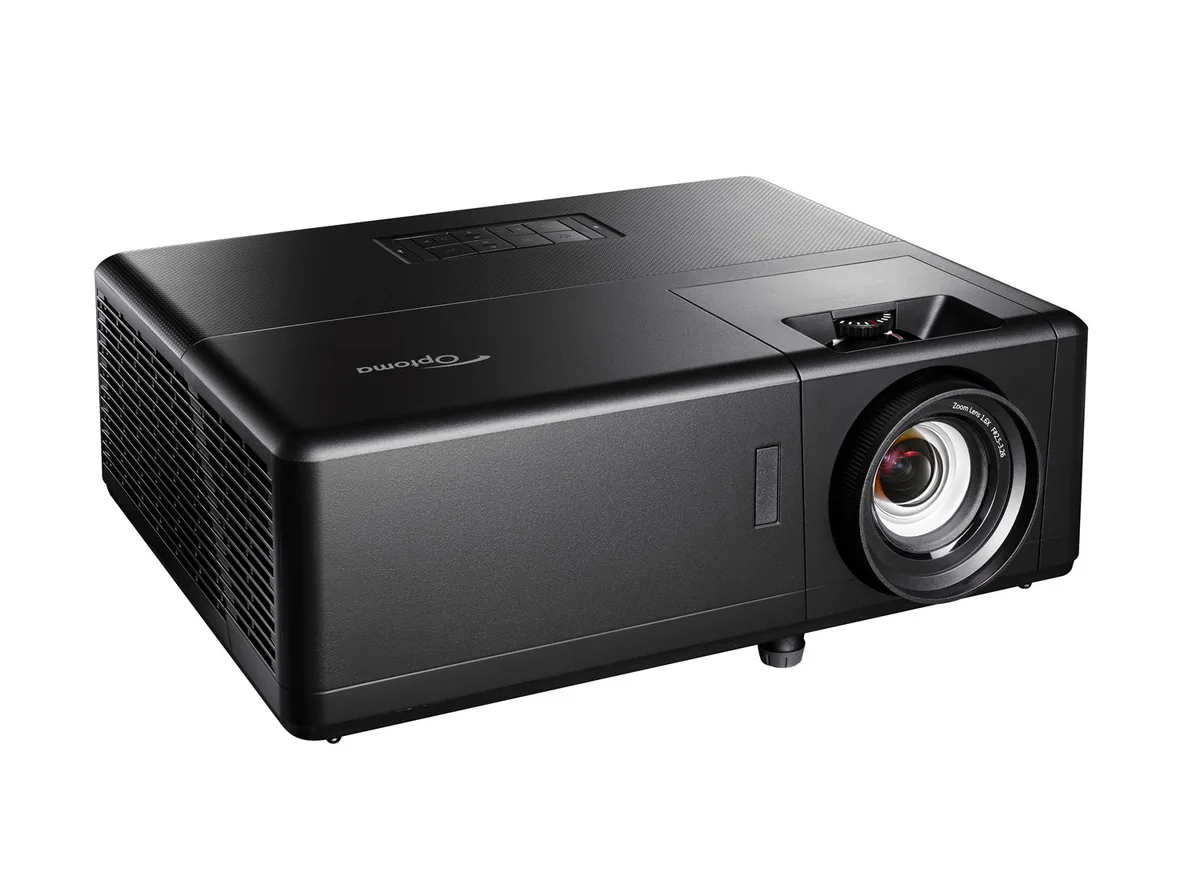
Measured in enhanced gaming mode: 18 ms at 1080p/60, 9 ms at 1080p/120, 5 ms at 1080p/240 and 18 ms at 4K/60. Those require game mode with no digital correction — keystone in the signal path adds latency and negates the figures.
Owner reports split sharply. One who is normally sensitive says he almost has to force it here. Another sees it badly enough after four months of ownership to find the projector hard to enjoy, especially on end credits. Sensitivity varies between people and no setting or screen removes it.
No. The artifact is produced by the projector showing colours in sequence, not by the surface. A grey screen lowers reflected black and white by the same proportion and changes nothing about colour timing. The only fix is a three-chip projector.
Owners report complaints about inputs failing to synchronise coming up repeatedly. It is not universal — owners who have not seen it note they would expect it to have shown by now — but it is common enough to be worth testing your specific source chain early.
Optoma's standard coverage is one year in most markets, which owners raise as a hesitation against brands offering three. It varies by region, so check locally before buying.

Home theater · DLP · 4K pixel-shift
Best for: A bright family room where the projector has to reach from the back wall

Portable · DLP · 1080p
Best for: Carrying a genuinely wide-gamut picture in a laptop bag

Gaming · DLP · 4K pixel-shift
Best for: A gaming room barely deeper than the screen is wide