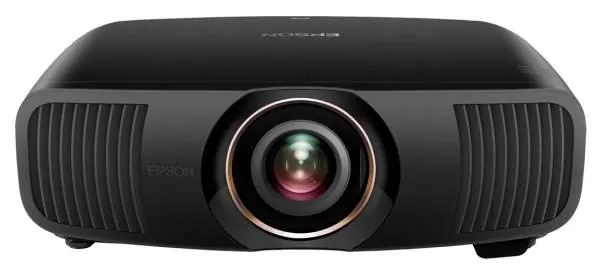
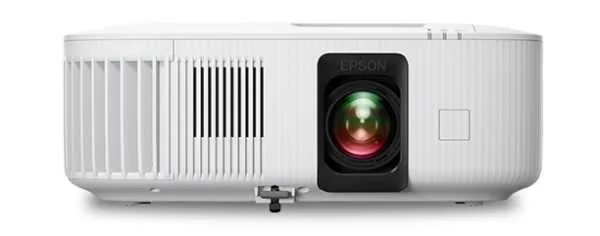
Epson Pro Cinema LS12000 projectorHome theater~$4,999

Epson

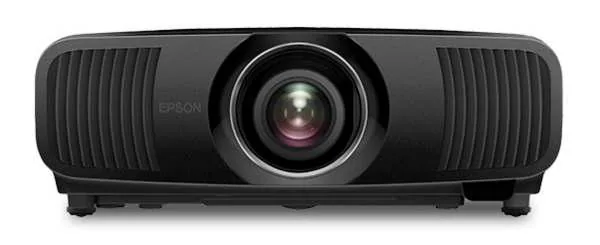
Epson Pro Cinema LS12000

The projector that made 4K/120 gaming normal in a home theater. A laser-phosphor light source rated 20,000 hours drives the same motorized 2.1x lens as the 5050UB, and two 48 Gbps HDMI 2.1 ports pass 4K/120 with input lag around 20 ms. Four-phase pixel shift puts a full 8.3 million pixels on screen.

Approx. price

~$4,999

snapshot, not a live price

Brightness

2,700

ISO 21118

Screen at 10 ft

48–102 in

16:9 diagonal, estimated from the throw ratio

Input lag

20 ms

fastest published mode

Light source

Laser-phosphor

20,000 h rated

Best for: A dedicated theater that is also a console gaming room

Specifications

Type
Home theater
Native resolution
4K pixel-shift
Light source
Laser-phosphor
Light source life
20,000 hours
Throw ratio
1.35–2.84:1
Zoom
2.1x
Dynamic contrast
2,500,000:1
Input lag (4K/60)
20 ms
Input lag (1080p/120)
20 ms
HDR formats
HDR10, HDR10+, HLG
3D
Full HD 3D
HDMI
2 × HDMI 2.1
Weight
28 lb
Released
2022

Features

  • 48 Gbps HDMI 2.1 x2 for 4K/120
  • Motorized 2.1x zoom, focus, shift and lens memory
  • ZX picture processor
  • HDR10+ dynamic tone mapping
  • 20,000-hour laser
  • Full HD 3D

What it does well

  • Two full-bandwidth HDMI 2.1 inputs pass 4K/120 at roughly 20 ms, which no lamp projector in this catalog can do
  • The 20,000-hour laser removes lamp replacement from the ownership cost entirely
  • Motorized 2.1x zoom, focus, shift and lens memory make scope-screen setups and awkward mounts trivial
  • HDR10+ support plus Epson's dynamic tone mapping handles bright highlights better than static HDR10 alone
  • Four-phase pixel shift resolves genuinely more detail than the two-phase shift on cheaper 3LCD models
  • 30 dB in normal mode despite the light output

What it gives up

  • 28 lb, and it needs a real mount and a real shelf
  • No dynamic iris, so native black level is a step behind the D-ILA and SXRD projectors above it
  • No built-in audio and no streaming — this is a component, not an appliance
  • At $4,999 it is competing with native-4K LCoS projectors on price
  • The 4K image is pixel-shifted from 1080p panels rather than produced by a native 4K imaging device, which shows at close seating distances

The two lists above are read off manufacturer specifications and published measurements, not from owner reports. Where owner discussion has been collected it appears separately below, so the two are never mistaken for each other.

What owners say

The recurring phrase in owner discussion is some version of "best bang for the buck", and it is almost always said while comparing this against a JVC that costs twice as much. Owners who made that comparison in person describe the JVC as better and then argue the gap does not justify the money, particularly once a screen and an audio system are in the budget.

What owners actually use it for skews toward gaming more than the price suggests: 4K at 120 frames with input lag under 20 ms comes up in almost every thread, and owners with a current console treat it as the deciding specification. The laser light source is the other thing they mention unprompted, usually as relief at never replacing a bulb.

The honest limits owners state are black level and pixel structure. Those who have compared it with native 4K panels at close range say the difference is real; those who watch from a normal distance say it is not. Several owners running an ambient-light-rejecting screen report that the screen does more for perceived black level than any projector setting.
What owners like

  • Owners call it the best value in home theater projection at its price, usually in the context of comparing it against JVC models costing twice as much
  • 4K/120 support with low input lag comes up constantly — owners running a current console describe it as the feature that decided the purchase
  • Owners who moved to it from lamp projectors emphasise never thinking about the light source again, and several mention colour not fading over time as a laser advantage
  • Owners report roughly 93% DCI-P3 coverage in practice and describe colour as a strength against rivals with better black levels
  • The four-phase pixel shift gets specific credit: owners who know the difference point out it puts 8.3 million pixel positions on screen where earlier Epsons managed about four million

Common complaints

  • Owners who have compared it closely to native 4K panels say the difference is visible up close, and one who calibrated one at length says it does not quite match a native imaging chip
  • Black level is where owners concede ground to JVC — several who use an ambient-light-rejecting screen say that is what closes the gap rather than the projector itself
  • Owners note there is no dynamic tone mapping in the sense JVC means it; Epson's scene-adaptive gamma is a different and less aggressive approach
  • It is heavy and large, and owners replacing older projectors report having to check the mount will take it
  • Several owners point out that by the time a screen, cabling and audio are budgeted, the real cost is well beyond the projector price

Questions owners ask about the Epson Pro Cinema LS12000

How close does it get to a JVC at twice the price?

Owners who have compared them directly say the JVC is better on black level and tone mapping and that the Epson is brighter and covers more of the DCI-P3 gamut. Several who made the comparison in a dealer's demo room chose the Epson and spent the difference on a screen and audio.

Is the pixel shifting a real 4K image?

It addresses all 8.3 million pixel positions using four-phase shifting, which is more than the two-phase shift in Epson's cheaper models. Owners who have examined it closely say a native 4K panel still resolves more detail up close; at normal seating distance most report seeing no difference.

Is it genuinely good for gaming?

Owners consistently say yes, and it is the main reason they pick it over rivals. It accepts 4K at 120 Hz over full-bandwidth HDMI 2.1 and owners report input lag under 20 ms in game mode.

Do I need a special screen?

Not necessarily, but owners in rooms with any ambient light report that an ambient-light-rejecting or ceiling-light-rejecting screen makes a larger difference to perceived contrast than anything on the projector. In a fully dark room with dark surfaces, owners use plain matte white.

How much lens shift does it have?

Owners describe the shift range as generous — the published figures are ±96% vertical and ±47% horizontal with a 2.1x powered zoom, and it is motorised with lens memory, so owners running a 2.35:1 screen switch framing from the remote.

What about 3D?

It supports Full HD 3D, which owners note is increasingly rare. Several say the honest test is whether you already own 3D discs: if you do not, it is not a reason to choose one projector over another in 2026.

Others in the same part of the catalog

Epson Home Cinema 2350 projector
Epson~$1,399

Epson Home Cinema 2350

Home theater · 3LCD · 1080p

Brightness
2,800lumensISO 21118
Screen at 10 ft
63–103 in
  • 2,800 ISO lumens
  • 1080p, no pixel shift
  • Streaming built in

Best for: A bright living room where a shelf at the back of the room is the only place a projector can go

More from Epson →

← Back to the catalog