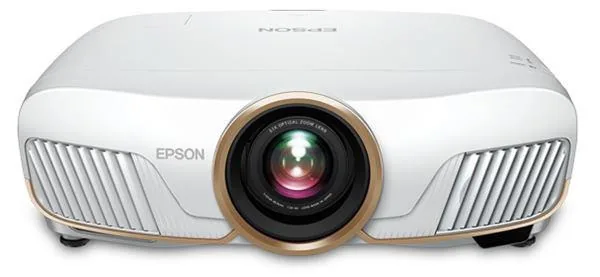
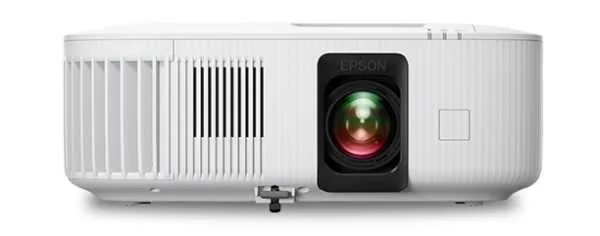
Epson Home Cinema QB1000 projectorHome theater~$7,999

Epson

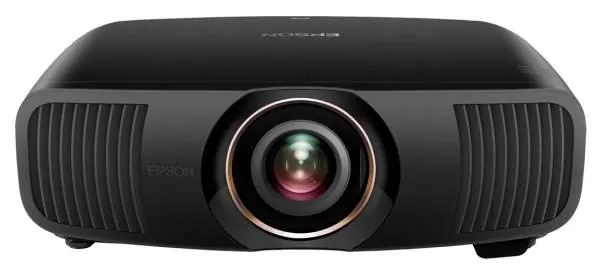
Epson Home Cinema QB1000

Epson's Q series replaced the LS12000 at the top of the 3LCD line with a multi-array laser, the QZX processor and a new UltraBlack treatment. At 3,300 ISO lumens it is the brightest pixel-shift 3LCD projector Epson sells, and it keeps the 2.1x motorized lens and 4K/120 HDMI 2.1 inputs.

Approx. price

~$7,999

snapshot, not a live price

Brightness

3,300

ISO 21118

Screen at 10 ft

48–102 in

16:9 diagonal, estimated from the throw ratio

Input lag

20 ms

fastest published mode

Light source

Laser-phosphor

20,000 h rated

Best for: A large screen in a theater that cannot be made fully dark

Specifications

Type
Home theater
Native resolution
4K pixel-shift
Light source
Laser-phosphor
Light source life
20,000 hours
Throw ratio
1.35–2.84:1
Zoom
2.1x
Input lag (4K/60)
20 ms
Input lag (1080p/120)
20 ms
HDR formats
HDR10, HDR10+, HLG
HDMI
2 × HDMI 2.1
Weight
28.2 lb
Released
2024

Features

  • Multi-array laser diode light source
  • QZX picture processor
  • VRX cinema lens
  • 48 Gbps HDMI 2.1 x2
  • Motorized zoom, focus, shift, lens memory
  • HDR10+ with scene-adaptive tone mapping

What it does well

  • 3,300 ISO lumens is the brightest figure in the 3LCD home-theater tier and it drives screens past 150 inches
  • UltraBlack plus the QZX processor lifts contrast well above the LS12000 it sits over
  • Full-bandwidth HDMI 2.1 with ~20 ms lag at 4K/120
  • The 2.1x motorized lens with memory carries over, so scope screens and off-axis mounts stay easy
  • 20,000-hour laser and no consumables

What it gives up

  • $7,999 puts it against native-4K D-ILA and SXRD projectors that beat it on native contrast
  • 3D support was dropped from this generation
  • 28.2 lb, and the chassis is as large as anything short of a JVC
  • No audio, no streaming, no eARC
  • Manual placement aside, it needs a genuinely dark room to show what the contrast processing can do — in a treated theater the D-ILA competition is still ahead

The two lists above are read off manufacturer specifications and published measurements, not from owner reports. Where owner discussion has been collected it appears separately below, so the two are never mistaken for each other.

What owners say

The recurring question owners ask about this projector is whether it is 90% of a JVC for a third of the money. The answer that comes back is nuanced: on brightness, lens flexibility and freedom from the rainbow artifact, it is excellent; on native contrast, which is the thing JVC's D-ILA projectors are actually bought for, the gap remains.

Where owners recommend it without hesitation is a real living room. Light walls, a white ceiling, no light control and children watching sport in the afternoon — in that room the contrast advantage of a D-ILA projector is destroyed by reflected light before it reaches your eye, and brightness is what buys a watchable picture. Owners with untreated rooms are steered here repeatedly.

The other consistent piece of advice is to shop it through dealers rather than at list. Owners report finding it in the $5,000 to $6,000 range, which puts it close to the cheaper model in Epson's own line and makes the extra brightness and contrast processing much easier to justify.
What owners like

  • Owners find it through dealers in the $5,000 to $6,000 range rather than at list price, which changes the value calculation substantially
  • Owners with untreated living rooms — light walls, light ceiling, no light control — recommend it over higher-contrast projectors, on the grounds that the room will destroy the contrast advantage anyway
  • The 2.1x zoom gets specific credit from owners working out what screen size a limited throw distance allows
  • Three-chip 3LCD means no rainbow artifact, which owners who are sensitive to it name as the reason they will not consider a DLP alternative
  • Owners describe it as brighter than the model below it in Epson's own range while keeping the same lens and installation flexibility

Common complaints

  • Owners ask openly whether it delivers most of a JVC's quality for a third of the price, and the honest answer in those threads is that native contrast remains the gap
  • At its full list price owners struggle to justify it against the model below, which is substantially cheaper and shares most of the lens hardware
  • Owners in genuinely dark, treated rooms are usually pointed at the D-ILA competition instead
  • No audio, no streaming and no eARC, so the full system cost is well above the projector

Questions owners ask about the Epson Home Cinema QB1000

Is it 90% of a JVC for a third of the price?

Owners ask this constantly. On brightness, lens flexibility and the absence of any rainbow artifact, it is very strong. On native contrast — the thing D-ILA projectors exist for — the gap is real and does not close. In a treated dark room the JVC wins; in an ordinary living room the brightness matters more.

Should I buy this or the cheaper model below it in the same range?

At list price owners find the step hard to justify, because the two share the lens hardware and much of the installation flexibility. When this one is discounted to the $5,000 to $6,000 range through a dealer, the extra brightness and contrast processing become much easier to argue for.

Is it right for an untreated living room?

Owners say yes, and this is where it is recommended most confidently. In a room with light walls and a white ceiling, reflected light destroys a high-contrast projector's advantage, so brightness is the specification that buys a watchable picture.

Will I see the rainbow effect?

No. Three-chip 3LCD puts all three colours on screen simultaneously, so the colour-sequential mechanism that produces the artifact does not exist. Owners who are sensitive to it rule out DLP projectors entirely and shop 3LCD or LCoS.

How big a screen can it fill?

The 2.1x zoom over a 1.35 to 2.84 throw range gives more latitude than almost anything else here. Owners working with a constrained throw distance — around 3.15 metres in one case — use a throw calculator to find the maximum width, and the wide zoom is what makes those rooms workable.

Others in the same part of the catalog

Epson Home Cinema 2350 projector
Epson~$1,399

Epson Home Cinema 2350

Home theater · 3LCD · 1080p

Brightness
2,800lumensISO 21118
Screen at 10 ft
63–103 in
  • 2,800 ISO lumens
  • 1080p, no pixel shift
  • Streaming built in

Best for: A bright living room where a shelf at the back of the room is the only place a projector can go

More from Epson →

← Back to the catalog