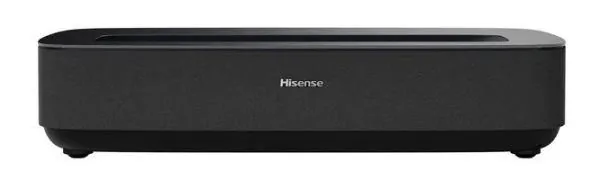
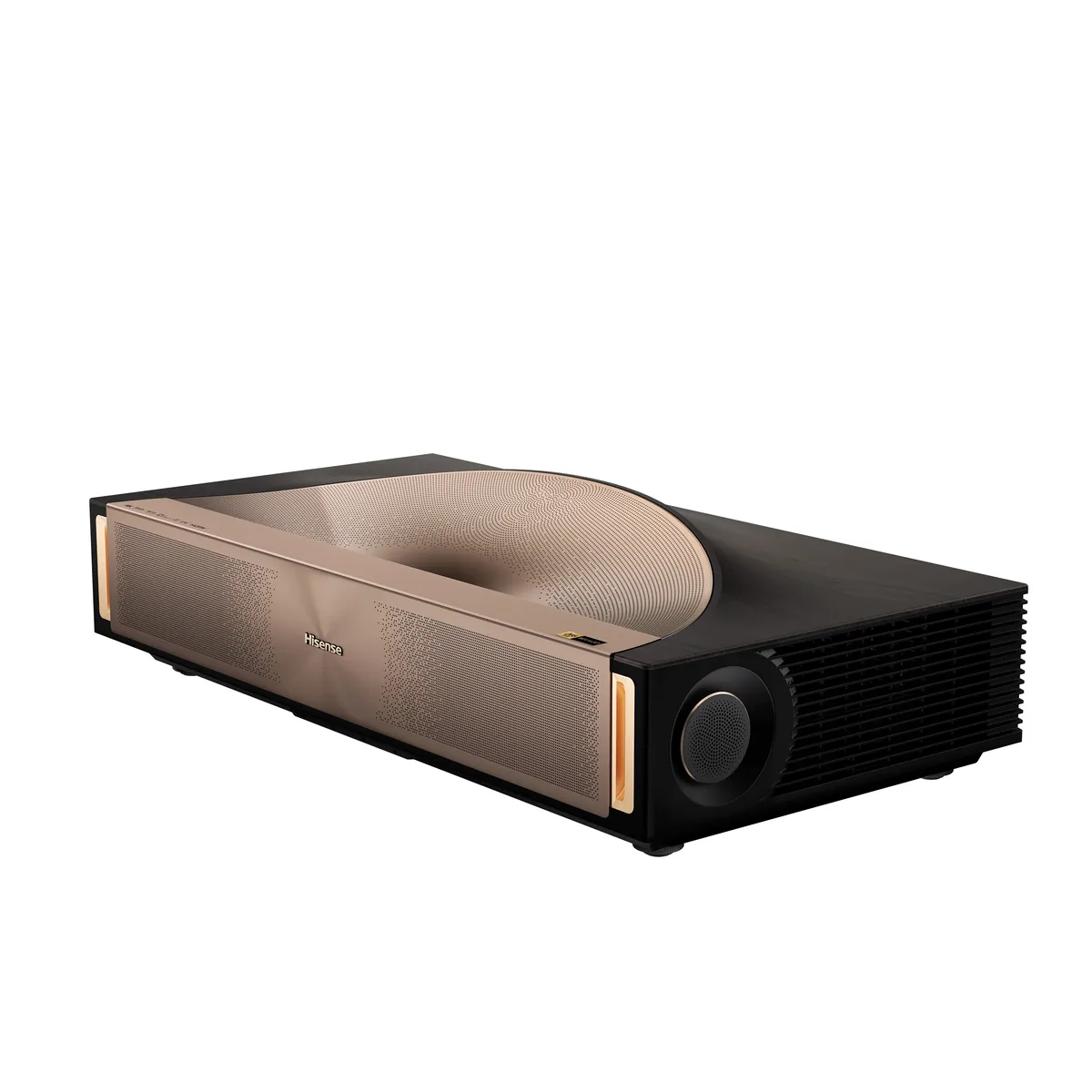
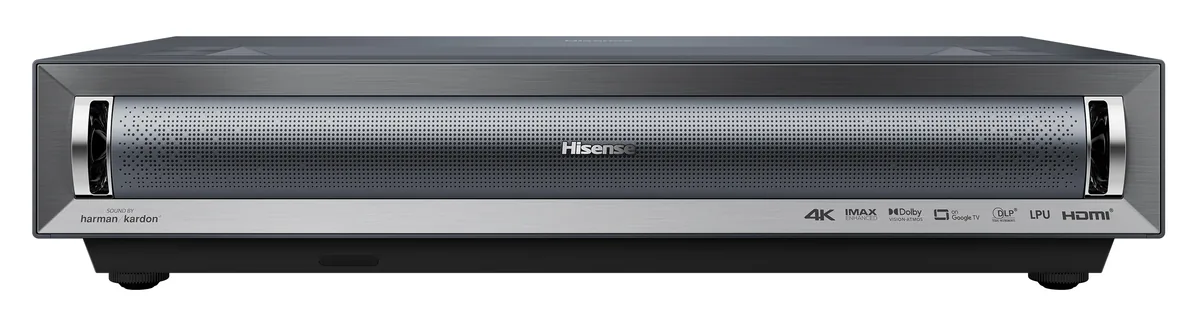
Hisense L9Q projectorUST laser TV~$5,331

Hisense

Hisense L9Q

The brightest projector in this catalog by a wide margin: 5,000 ANSI lumens from an RGB tri-laser at a 0.18 throw ratio, with a 128 W 6.2.2 Dolby Atmos system built into the cabinet. It ships as a package with an ambient-light-rejecting screen.

Approx. price

~$5,331

snapshot, not a live price

Brightness

5,000

ANSI

100-inch screen at

16 in

lens to screen, estimated from the throw ratio

Light source

Tri-laser

25,000 h rated

Best for: A living room with big windows that has to work at noon

Specifications

Type
UST laser TV
Native resolution
4K pixel-shift
Light source
Tri-laser
Light source life
25,000 hours
Zoom
Fixed lens
HDR formats
Dolby Vision, HDR10+, HLG
3D
Full HD 3D
Built-in streaming
Vidaa
Speakers
128 W total
HDMI
4 × HDMI 2.1
Weight
28.4 lb
Released
2025

Features

  • 5,000 ANSI lumens tri-laser
  • 0.18 throw ratio
  • 128 W 6.2.2 Dolby Atmos system
  • Four HDMI inputs, two at 2.1
  • Dolby Vision and HDR10+
  • Ships with an ALR screen

What it does well

  • 5,000 ANSI lumens is the highest standardized brightness in this catalog and it genuinely works in daylight
  • The built-in 6.2.2 Dolby Atmos system at 128 W removes the need for any external audio
  • RGB tri-laser with Dolby Vision and HDR10+
  • Four HDMI inputs is more than any other projector here
  • A matched ALR screen is part of the package rather than a separate $1,000 problem

What it gives up

  • 5,000:1 native contrast — brightness, not black level, is what this buys
  • 28.4 lb cabinet plus a fixed screen makes this a permanent installation
  • 60 Hz only, with no published input-lag figure
  • Vidaa rather than Google TV
  • It shipped with almost no independent measurement published, so the headline figures rest on Hisense's own testing

The two lists above are read off manufacturer specifications and published measurements, not from owner reports. Where owner discussion has been collected it appears separately below, so the two are never mistaken for each other.

What owners say

The brightness figure is the whole argument for this projector and it is an unusually well-attested one: an owner who replaced a 4,000-lumen ultra-short-throw with it posted before-and-after pictures thirty minutes apart and described the earlier projector as simply not as bright as expected. In a living room with real daylight, that gap is the purchase.

The details that owner raised turn out to matter as much as the picture. The projector it replaced had no screen trigger, so a motorised screen could not roll up and down with it, and it would not integrate with his home-automation system. This one does both — which is the kind of thing nobody puts in a specification comparison and everybody notices after installation.

The cautions are price and timing. It arrived with almost no independent testing, and owners repeatedly held off until reviews appeared. It also costs considerably more than the established rivals, one of which regularly discounts to around $3,000 — a gap owners weigh carefully against the extra 2,000 lumens.
What owners like

  • An owner who replaced a 4,000-lumen ultra-short-throw with this one reports the brightness difference as immediately visible and says the projector it replaced was not as bright as expected
  • Owners with bright living rooms treat brightness as the first specification and pick this over every rival on that basis
  • It has a screen trigger, which the owner upgrading from a rival specifically welcomed — the previous projector could not roll a motorised screen up or down
  • Owners report it integrates properly with home-automation control systems where its predecessor did not
  • The tri-laser engine with Dolby Vision and HDR10+ puts it at the top of the ultra-short-throw specification list

Common complaints

  • It arrived with essentially no independent review coverage, and owners repeatedly asked when comprehensive testing would appear before committing
  • It is significantly more expensive than the well-established rivals, and owners note the cheaper flagship goes on sale to around $3,000 regularly
  • Laser sparkle is a live concern owners raise when choosing a screen for it, particularly with higher-gain surfaces
  • 5,000:1 contrast is a brightness-first specification, and owners in dark rooms question whether that is the right trade

Questions owners ask about the Hisense L9Q

Is it noticeably brighter than the 4,000-lumen competition?

An owner who replaced one with the other says yes and posted comparison photographs taken half an hour apart. He also described the projector he replaced as not as bright as he had expected from its specification, which is a useful reminder that the difference between 4,000 and 5,000 lumens is real but not dramatic.

What screen should I pair with it?

Owners in a genuinely dark, dark-painted room question whether an ambient-light-rejecting screen helps at all and raise laser sparkle as a reason to avoid high gain. In a bright room the matched ALR screen is the whole point. The answer depends entirely on the room, and it is a four-figure decision either way.

Does it work with a motorised screen and home automation?

Yes on both, and an owner upgrading from a rival specifically named those as the reasons — the previous projector had no screen trigger and did not play nicely with his control system. It is the kind of integration detail that does not appear in specification comparisons.

Is it worth the premium over the cheaper flagships?

Owners debate this openly. The cheaper tri-laser flagship discounts to around $3,000 regularly and is well reviewed; this one is brighter and better equipped and costs considerably more. Owners in bright rooms tend to pay; owners with controlled light tend not to.

Were there reviews when it launched?

Barely any, and owners repeatedly said they were holding off until comprehensive testing appeared. If that matters to you, check what independent measurement exists before ordering rather than relying on pre-order pricing pressure.

Others in the same part of the catalog

Hisense PX3-Pro projector
Hisense~$2,998

Hisense PX3-Pro

UST laser TV · DLP · 4K pixel-shift

Brightness
3,000lumensANSI
  • 3,000 ANSI lumens
  • Tri-laser, 110% BT.2020
  • Dolby Vision

Best for: Replacing a television in a bright living room without giving up color

Hisense PL2 projector
Hisense~$2,499

Hisense PL2

UST laser TV · DLP · 4K pixel-shift

Brightness
2,700lumensANSI
  • 2,700 ANSI lumens
  • Dolby Vision
  • $2,499

Best for: A laser TV budget that stops short of tri-laser

More from Hisense →

← Back to the catalog