ALR Screens: What They Reject, and Why Yours Might Not Work

Short answer

An ALR screen is directional, not magic. A lenticular UST screen accepts light from below and rejects it from above; an angular-reflective screen for a ceiling-mounted projector does the opposite. Pairing a projector with the wrong type is the most common reason an expensive screen disappoints.

Rejection is geometry, not filtering

An ambient-light-rejecting screen does not absorb room light selectively — it cannot tell the difference between a photon from your projector and a photon from a lamp. What it does is reflect light differently depending on the angle it arrives from. The surface is built with microscopic structures — sawtooth lenticules on a UST screen, angled optical layers on a standard one — that send light from the projector's direction toward the seats and send light from other directions into a black absorbing layer.

That makes the screen's geometry a specification you have to match, exactly like throw ratio. It is not a quality tier where more money is better.

The two types, and the mismatch that ruins pictures

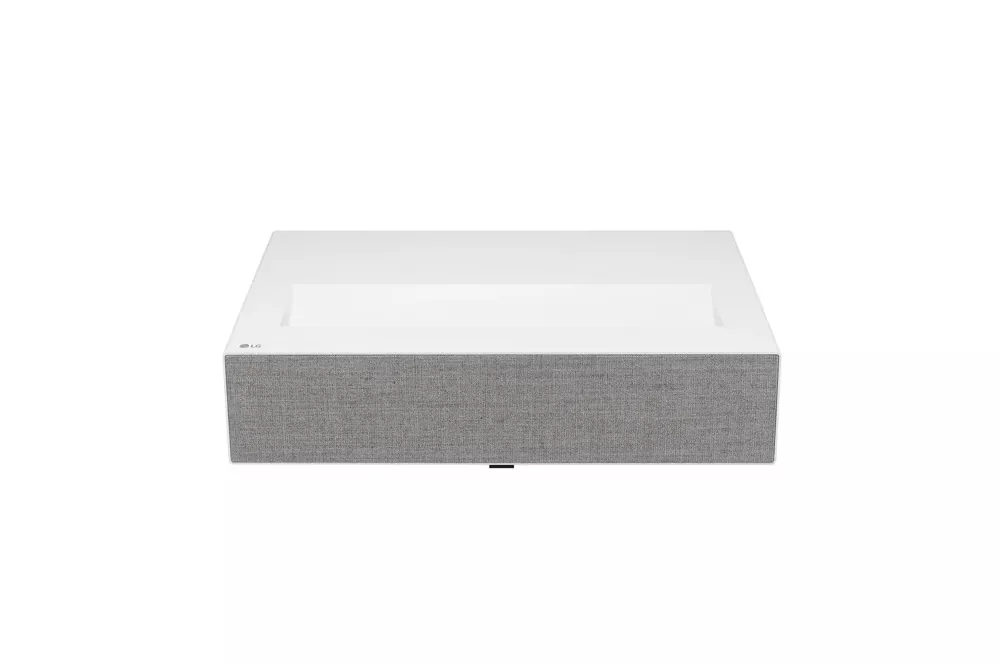
A UST ALR screen has horizontal lenticules that accept light arriving steeply from below — which is where a UST projector, sitting on a cabinet a foot under the screen, is. Everything from above (ceiling lights, windows) and from the sides hits the black layer. Point a ceiling-mounted long-throw projector at one and you are firing into the rejection zone: the image will be dim and unevenly lit.

A standard, angular-reflective ALR screen does the opposite. It accepts light on-axis from in front and rejects off-axis light, so it suits a projector mounted at or near seating height in front of the screen. Put a UST below one and the result is the same failure in reverse. There is no screen that does both.

Projector positionScreen type to buyWhat it rejects
Cabinet under the screen (UST)Lenticular UST ALROverhead and side light
Ceiling mount, long throwAngular-reflective ALR, or matte whiteOff-axis side light
Dark room, any positionMatte white, 1.0–1.3 gainNothing — and it does not need to

What you give up

ALR screens are narrower in viewing angle than matte white. That is the same directionality that rejects room light, working against you: seats far off to the side see a dimmer picture, and on some lenticular screens a visible change in brightness across the width. Measure the seating spread before committing to a 120-inch ALR screen in a wide room.

Some ALR surfaces also show structure — the lenticules can be visible as fine horizontal lines from close up, and a few designs show a subtle sparkle. And ALR material is stiff and expensive, which is why these screens are fixed-frame rather than pull-down and why they routinely cost as much as a mid-range projector.

When you do not need one

In a room that goes properly dark, an ALR screen is the wrong purchase: it costs more, it narrows the viewing cone, and the light it rejects is light that is not there. Matte white at around 1.0 to 1.3 gain is what dedicated home theaters use, and it is what the projectors in this catalog with the highest native contrast are designed around.

The rule of thumb that holds up: control the room first, because it is free. Close the blinds, kill the reflective surfaces opposite the screen, paint the ceiling above the screen something dark. Buy the ALR screen for the light you genuinely cannot get rid of.
Projectors this comes up with

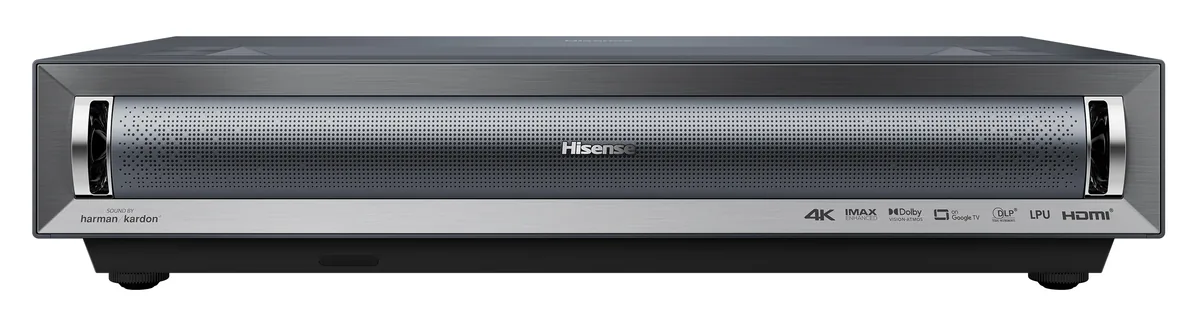
Hisense PX3-Pro projector
Hisense~$2,998

Hisense PX3-Pro

UST laser TV · DLP · 4K pixel-shift

Brightness
3,000lumensANSI
  • 3,000 ANSI lumens
  • Tri-laser, 110% BT.2020
  • Dolby Vision

Best for: Replacing a television in a bright living room without giving up color

Related

  • Do You Need a Projector Screen, or Will a Wall Do?

    A flat, smooth, matte white wall works, and in a dark room the difference between it and a mid-priced white screen is small. A screen earns its money in two situations: when the room has light you cannot control, and when the wall is textured, off-white, or not flat.

  • Projector or a 98-Inch TV?

    If the room can be darkened for viewing, a projector gives you a bigger, more cinema-like picture for less money per inch. If it cannot, a television wins on every measure that matters and it is not close. Size is the wrong axis to compare them on.

  • How to read a projector spec sheet

    Every specification explained, with the real numbers from the catalog.