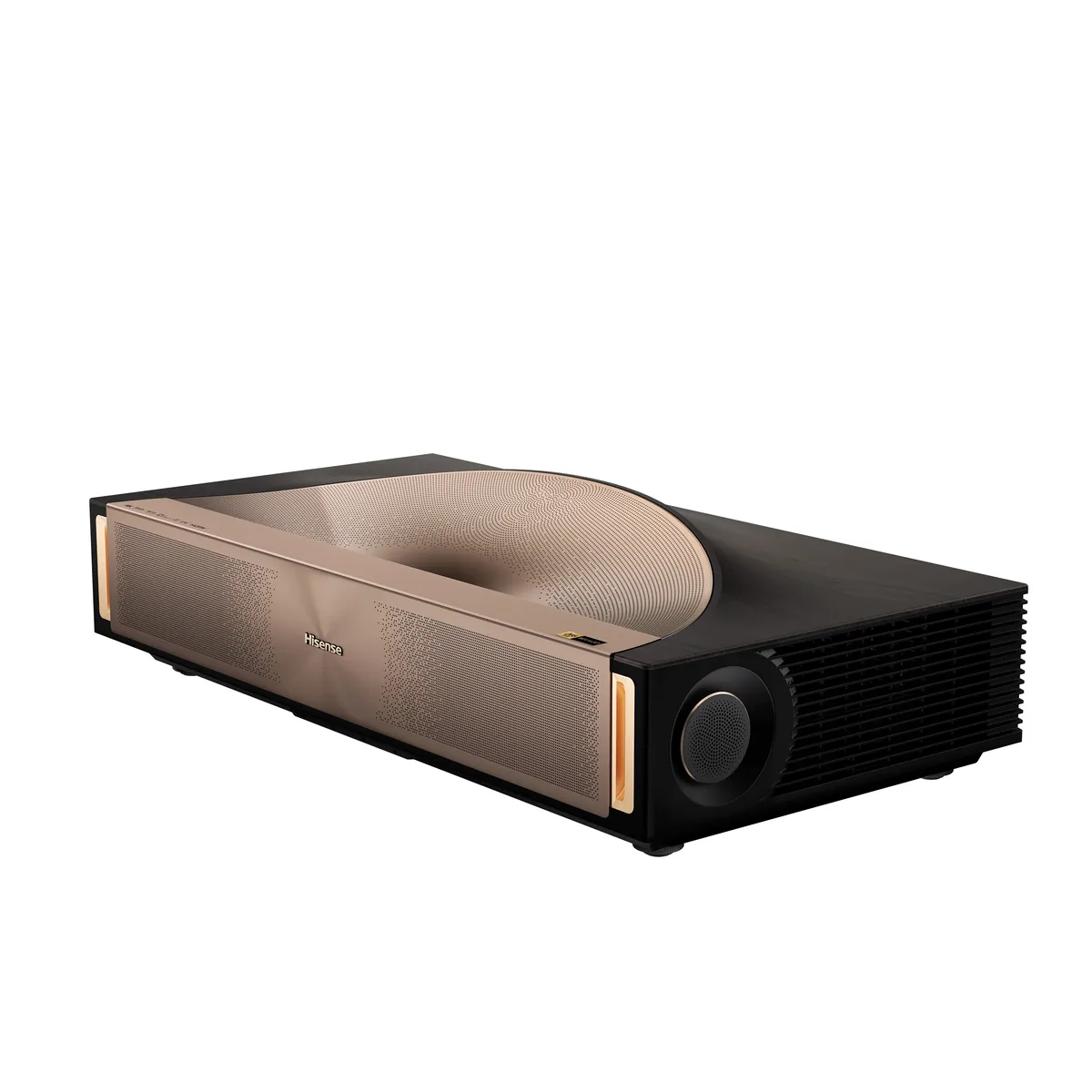
Hisense~$5,331
Hisense L9Q
UST laser TV · DLP · 4K pixel-shift
- Brightness
- 5,000lumensANSI
- 100-inch screen at
- 16 in
- 5,000 ANSI lumens
- Brightest here
- 128 W Atmos
Best for: A living room with big windows that has to work at noon
Short answer
If the room can be darkened for viewing, a projector gives you a bigger, more cinema-like picture for less money per inch. If it cannot, a television wins on every measure that matters and it is not close. Size is the wrong axis to compare them on.
A television emits light. A projector reflects it off a surface that is also reflecting every other light source in the room. That single difference drives almost every other trade-off. A modern high-end television will hit over a thousand nits on a highlight; a projector on a 120-inch screen in a lit room is producing a small fraction of that, spread over four times the area.
So the first question is not about size or price. It is: can this room be made dark when people watch, and are they willing to do it? A household that watches with the blinds open and the kitchen lights on will be happier with a television at any size. A household that closes the blinds for a film will get something from a projector that no television delivers.
Scale, first: the largest televisions sold are around 98 to 115 inches, and they cost as much as a car. The projectors in this catalog reach 120 to 150 inches routinely, and the middle of the price range does it for a few thousand dollars. A 150-inch image is more than twice the screen area of a 98-inch one.
Then there is the quality of the image itself, which is harder to quantify and is why the comparison keeps recurring. Reflected light is gentler than emitted light, and a large reflected image at moderate brightness is markedly less fatiguing to watch for three hours than a bright emissive panel. And a projector disappears when it is off — a retractable screen or a UST cabinet leaves a room that is a room, not a room with a black rectangle in it.
Black level, first and decisively. An OLED television switches individual pixels off. The very best projector in this catalog publishes 100,000:1 native contrast, which is excellent for a projector and is not the same thing as off. In a room with any ambient light, the reflected-light disadvantage compounds it.
Then: no light-source consumable, no fan noise, no throw-distance constraint, no screen purchase, instant on, and a picture that works at noon with the curtains open. Ultra-short-throw laser TVs exist to close part of that gap — they sit in a cabinet like a television and the brightest in this catalog is rated 5,000 ANSI lumens — but they do it by adding a four-figure ambient-light-rejecting screen to the bill.
| Projector | Large TV | UST laser TV | |
|---|---|---|---|
| Best in | Dark or dimmable room | Any room | Bright room, with an ALR screen |
| Practical size | 100–150 in | 77–98 in | 100–130 in |
| Black level | Depends on the room | Excellent | Needs the ALR screen to be watchable |
| Extra purchases | Screen, mount, audio | Stand | Matched ALR screen, often $1,000+ |
| Consumables | Lamp models only | None | None |
For a dedicated room, a basement, or any space where darkness is available on demand, the projector is the better buy and the gap widens with screen size. For an open-plan living room with windows on two sides that is also the news-and-breakfast television, a television is the right answer and a projector will be an expensive disappointment.
For the common middle case — a living room that can be made reasonably dark in the evening but is bright by day — the honest answer is that both work and the deciding factor is what the room is used for the rest of the time. That is also the case a UST laser TV is designed for, and where its cost premium is easiest to justify.
UST laser TV · DLP · 4K pixel-shift
Best for: A living room with big windows that has to work at noon
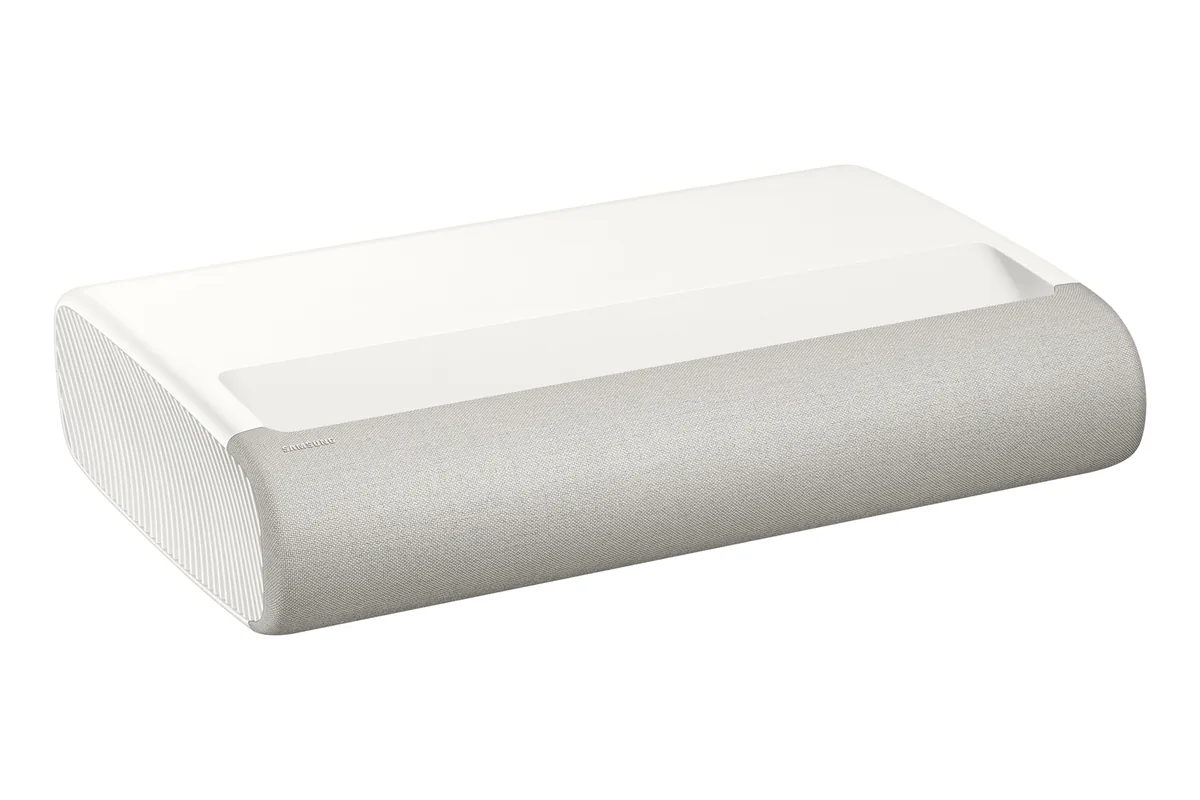
UST laser TV · DLP · 4K pixel-shift
Best for: A Samsung household that wants the TV interface on a 130-inch picture
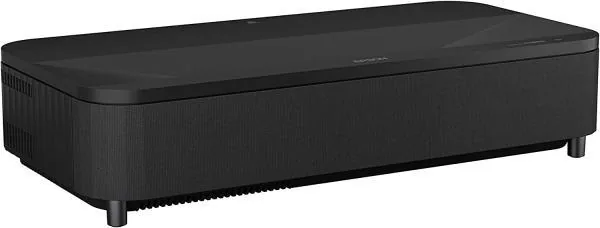
UST laser TV · 3LCD · 4K pixel-shift
Best for: A living room where the projector has to replace the TV and the room never gets dark
An ALR screen is directional, not magic. A lenticular UST screen accepts light from below and rejects it from above; an angular-reflective screen for a ceiling-mounted projector does the opposite. Pairing a projector with the wrong type is the most common reason an expensive screen disappoints.
A flat, smooth, matte white wall works, and in a dark room the difference between it and a mid-priced white screen is small. A screen earns its money in two situations: when the room has light you cannot control, and when the wall is textured, off-white, or not flat.
Every specification explained, with the real numbers from the catalog.